Physical Address
304 North Cardinal St.
Dorchester Center, MA 02124
Physical Address
304 North Cardinal St.
Dorchester Center, MA 02124

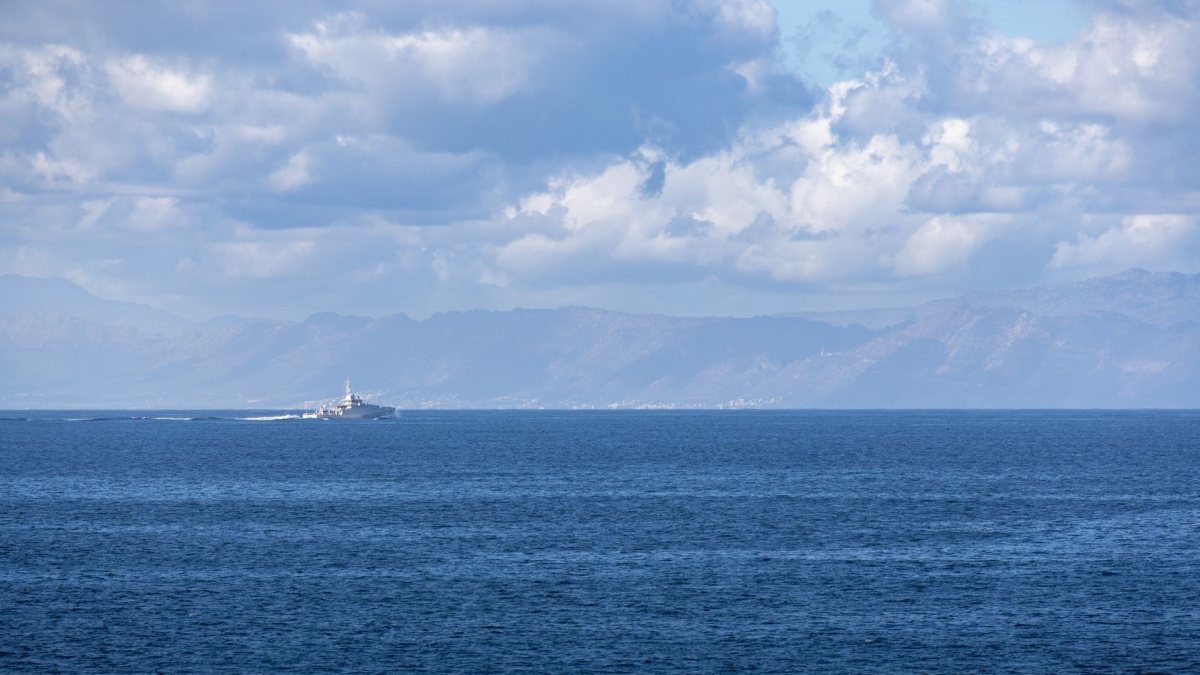
Recent territorial gains by Houthi forces in Yemen, including key maritime areas, threaten global shipping lanes and complicate Washington's Middle East strategy.
Recent territorial advancements by Houthi forces in Yemen have escalated tensions in the Middle East, placing the United States and its allies in a challenging strategic position. The rebel group’s capture of key coastal territory and offshore islands in the Red Sea has directly threatened one of the world’s most vital maritime trade routes, forcing Washington to reassess its security posture in the region.
As the conflict intensifies, the threat of wider regional instability looms large. The situation has reignited debates within the U.S. foreign policy establishment over how to deter the Iran-backed group without dragging the military into another prolonged conflict or inadvertently disrupting global energy markets.
The Red Sea serves as a maritime superhighway, connecting the Indian Ocean to the Mediterranean Sea via the Suez Canal. Approximately 12 percent of global trade, including vast quantities of oil and liquefied natural gas, passes through these waters daily. Any disruption here has immediate cascading effects on global supply chains, shipping insurance rates, and consumer prices in the West.
By securing footholds on islands and coastal strips along the Bab al-Mandab Strait, the Houthis have enhanced their capability to launch targeted drone and missile attacks against commercial vessels. Security analysts note that even the threat of such attacks forces shipping conglomerates to reroute vessels around the southern tip of Africa, adding weeks to transit times and millions of dollars in fuel costs.
For the United States, the Houthi escalation presents a complex diplomatic and military puzzle. The current administration has sought to balance several competing priorities in the region:
Military intervention, such as airstrikes on Houthi launch sites, has so far yielded limited long-term deterrence. Analysts suggest that the group’s decentralized structure and mobile weaponry make them highly resilient to conventional air campaigns.
The conflict in Yemen cannot be viewed in isolation from the broader geopolitical rivalry between Saudi Arabia and Iran. Tehran has long been accused of providing the Houthis with advanced weaponry, intelligence, and financial backing, a charge that Iran officially denies despite substantial evidence of weapons transfers intercepted at sea.
Meanwhile, neighboring Gulf states find themselves in a delicate position. Saudi Arabia, which led a costly military coalition against the Houthis for years, has recently sought a diplomatic exit from the conflict to focus on domestic economic reforms. A renewed escalation threatens to draw Riyadh back into a war it has actively tried to wind down.
Historically, crises of this nature in critical waterways lead to a predictable set of international responses. The United States and its partners are likely to pursue a multi-pronged strategy in the coming weeks.
First, expect an increase in multinational naval patrols under initiatives like Operation Prosperity Guardian to provide armed escorts for commercial vessels. Second, diplomatic pressure will likely intensify at the United Nations to enforce existing arms embargoes more strictly. Finally, there may be renewed efforts to engage backchannel diplomacy through regional intermediaries like Oman to negotiate localized ceasefires near critical shipping lanes.
The Houthis, formally known as Ansar Allah, are a political and military movement originating from northern Yemen. They belong to the Zaidi branch of Shia Islam and seized control of Yemen’s capital, Sana’a, in 2014, sparking a ongoing civil war.
The Bab al-Mandab Strait is a narrow chokepoint between Yemen on the Arabian Peninsula and Djibouti and Eritrea in the Horn of Africa. It controls access to the Red Sea and the Suez Canal, making it vital for international maritime trade.
The U.S. has deployed naval assets to intercept Houthi drones and missiles, led an international maritime coalition to protect commercial shipping, and targeted Houthi military infrastructure with precision airstrikes, while simultaneously pursuing diplomatic avenues.
The Houthi advances in Yemen represent a significant challenge to the international rules-based order and maritime security. As the threat to global trade grows, the United States is forced to navigate a narrow path between active military deterrence and diplomatic restraint, knowing that any misstep could trigger a broader conflict in an already volatile region.
Reference: This report was compiled from publicly reported information. Original coverage: Reuters.
Photo: Magda Ehlers / Pexels




