Physical Address
304 North Cardinal St.
Dorchester Center, MA 02124
Physical Address
304 North Cardinal St.
Dorchester Center, MA 02124

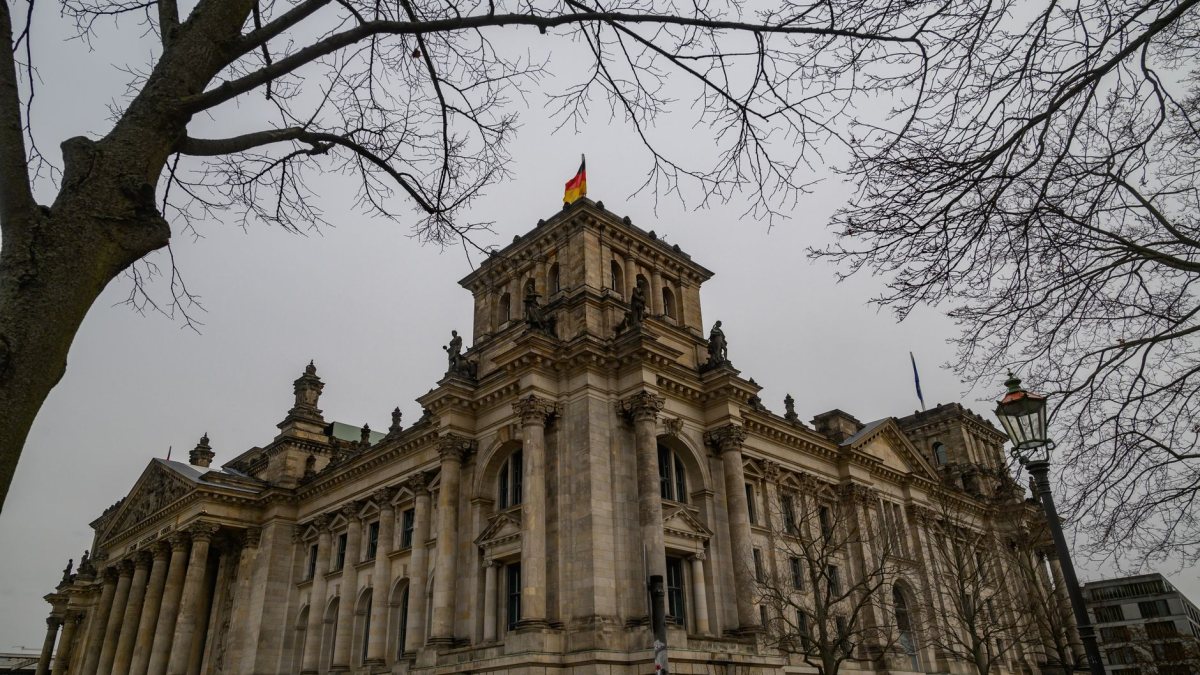
A heated parliamentary debate in Berlin has exposed deep rifts as mainstream leaders confront the AfD following historic state-level election results in eastern Germany.
The German Bundestag has witnessed one of its most combative sessions in recent memory as national political leaders clashed over the fallout of recent state elections. The debate highlighted the profound anxiety gripping the federal republic’s political establishment following unprecedented gains by the far-right Alternative for Germany (AfD) in Thuringia and Saxony.
Friedrich Merz, leader of the opposition Christian Democratic Union (CDU), took center stage to launch a direct assault on the AfD, framing the party as a threat to the nation’s democratic institutions and economic stability. The confrontation underscored the challenges facing Germany’s traditional parties as they attempt to contain the populist surge ahead of next year’s federal election.
The atmosphere in the plenary chamber was tense from the outset, with frequent interruptions, heckling, and sharp exchanges between the government benches, the conservative opposition, and the far-right. Friedrich Merz used his time at the podium to position the CDU as the primary bulwark against political extremism, accusing the AfD of exploiting public anxieties and harboring anti-democratic sentiments.
In response, AfD co-leader Alice Weidel defended her party’s performance, arguing that the election results in the east represented a clear mandate from voters who feel abandoned by the federal coalition in Berlin. She accused the political mainstream of undemocratically ostracizing her party and ignoring the electorate’s concerns regarding migration and economic stagnation.
The parliamentary clash was directly triggered by the historic results in Thuringia and Saxony, where the AfD achieved its strongest performances since its founding in 2013. In Thuringia, the party secured first place, marking the first time a far-right party has won a state election in post-war Germany. In neighboring Saxony, the party finished a close second behind the CDU.
These results have sent shockwaves through the federal political landscape for several reasons:
The debate in the Bundestag quickly pivoted to the issue of irregular migration, which has emerged as the central battleground in German politics. Under pressure from both the CDU and the rising poll numbers of the AfD, Chancellor Olaf Scholz’s coalition government has recently announced tighter border controls and accelerated deportations.
While Merz argued that the government’s measures do not go far enough to secure the country’s borders, the AfD claimed credit for forcing the mainstream parties to adopt their rhetoric. Political analysts note that the debate has shifted significantly to the right, with traditional parties feeling compelled to address voter concerns on immigration more aggressively to prevent further losses.
Beyond domestic policy, the parliamentary debate touched on deep divisions regarding Germany’s foreign policy, particularly its support for Ukraine. Both the AfD and the BSW have campaigned on platforms opposing military aid to Kyiv and advocating for a swift diplomatic resolution with Russia, a stance that mainstream politicians argue aligns closely with Moscow’s interests.
Critics of the populist parties accuse them of using divisive rhetoric that undermines Western solidarity. However, these anti-war and anti-sanction messages have resonated strongly with a significant portion of the electorate in eastern Germany, where historical ties and economic concerns shape perspectives on relations with Russia.
In Thuringia, the AfD won the largest share of the vote, while in Saxony, the CDU narrowly maintained its first-place position ahead of the AfD. Both states saw a significant decline in support for the federal coalition parties (SPD, Greens, and FDP).
The ‘firewall’ refers to a political consensus among Germany’s mainstream parties to reject any formal cooperation, coalition agreements, or legislative reliance on the AfD due to concerns over the party’s democratic credentials.
The results have weakened the authority of Chancellor Olaf Scholz’s coalition government and intensified internal debates over key policy areas like migration and energy, raising tensions ahead of the federal election scheduled for autumn 2025.
The stormy debate in the Bundestag is a clear indication that Germany has entered a volatile political era. As the traditional consensus-based political model faces unprecedented pressure, the mainstream parties are struggling to find an effective strategy to counter the rise of populist forces. The coming months will test the resilience of Germany’s democratic structures as states attempt to form stable governments and federal parties prepare for a highly polarized national campaign.
Reference: This report was compiled from publicly reported information. Original coverage: BBC.
Photo: Osviel Rodriguez Valdés / Pexels




