Physical Address
304 North Cardinal St.
Dorchester Center, MA 02124
Physical Address
304 North Cardinal St.
Dorchester Center, MA 02124

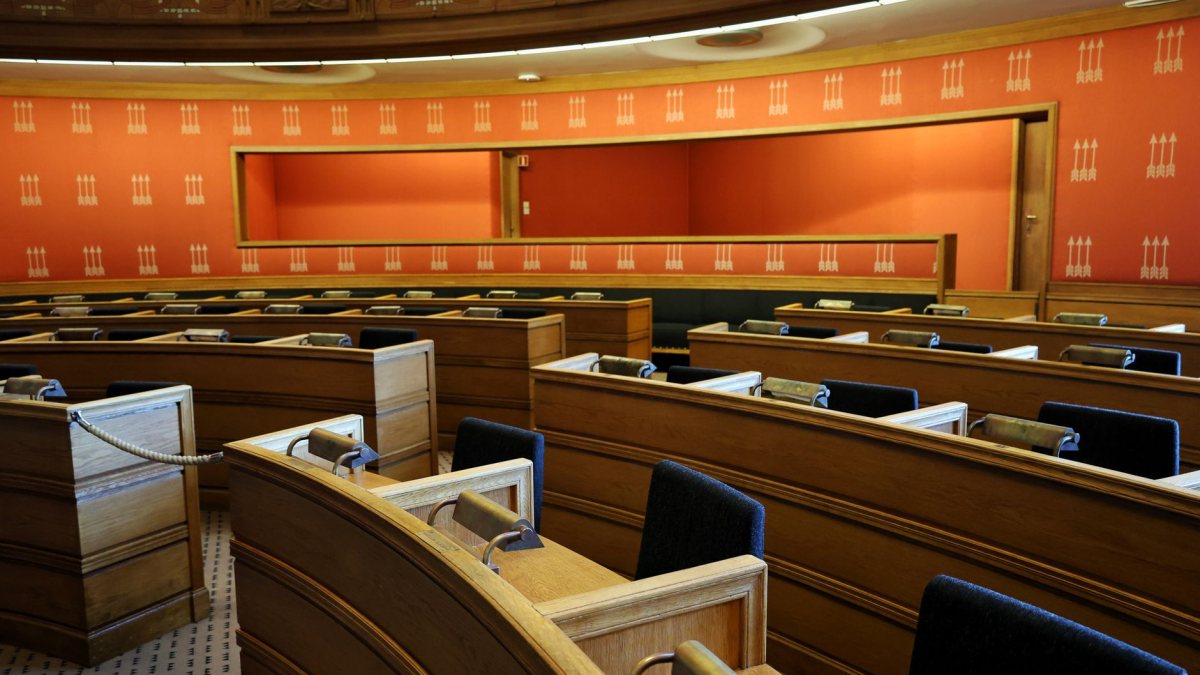
The federal government prepares for a parliamentary debate on administrative divisions, amid rising calls for decentralisation and grassroot empowerment.
The federal government has signaled that the highly debated issue of creating new administrative provinces in Pakistan will be brought to the floor of Parliament. Senior leaders of the Pakistan Muslim League-Nawaz (PML-N) have indicated that the National Assembly and the Senate will hold detailed discussions on the matter during their upcoming sessions, marking a renewed legislative focus on the country’s internal boundaries.
The debate comes at a time when political leaders and civil society groups are increasingly questioning the efficacy of the current provincial setup. With administrative challenges mounting in large, densely populated regions, proponents of devolution argue that smaller units are essential for effective governance, while critics warn of the political and constitutional hurdles involved in redrawing the national map.
According to government representatives, the debate on the creation of new provinces is expected to be scheduled for the parliamentary sessions in October. Senior PML-N leader Rana Sanaullah has clarified that any decision regarding the alteration of provincial boundaries ultimately rests with the Parliament, emphasizing that such structural changes require a broad political consensus.
The legislative process for creating a new province in Pakistan is notoriously complex. Under the Constitution of Pakistan, any amendment to alter provincial boundaries requires not only a two-thirds majority in both houses of Parliament—the National Assembly and the Senate—but also the approval of the provincial assembly of the affected province by a similar two-thirds majority. This high constitutional threshold has historically stalled various initiatives aimed at carving out new administrative divisions.
Advocates for new provinces argue that the current administrative structure, largely inherited from the colonial era, is no longer adequate for a population that has crossed 240 million. Large provinces like Punjab, which houses over half of the country’s population, face immense governance bottlenecks. Supporters of the movement for a South Punjab province, for instance, argue that administrative power concentrated in Lahore neglects the developmental needs of distant southern districts.
Similarly, in other parts of the country, there are persistent demands for administrative restructuring. In Sindh, certain quarters have periodically raised voices for new administrative setups, arguing that urban and rural divisions require distinct governance models. Proponents argue that smaller provinces would lead to:
While the debate on new provinces gains traction, senior policymakers are also calling attention to the shortcomings of the existing devolution framework. It has been nearly fifteen years since the passage of the landmark 18th Constitutional Amendment, which devolved significant powers from the federal government to the provinces. However, critics argue that the benefits of this devolution have failed to trickle down to the grassroots level.
Federal Minister Ahsan Iqbal recently pointed out that while provinces successfully clawed back authority and resources from Islamabad, they failed to pass these advantages down to local governments. The reluctance of provincial governments to establish strong, financially independent local government systems has left local municipalities dysfunctional, leaving citizens without basic civic amenities despite the devolution of power.
Despite the rhetoric, the path to establishing new provinces is fraught with political landmines. Major political parties often hold conflicting views based on their regional power bases. For example, while the PML-N and the Pakistan Peoples Party (PPP) have occasionally supported the idea of a South Punjab province in their election manifestos, actual progress has been minimal due to disagreements over the exact boundaries and administrative control.
Furthermore, there are fears that dividing provinces along ethnic or linguistic lines could exacerbate regional tensions. Political analysts suggest that unless there is a bipartisan consensus that transcends electoral interests, parliamentary debates on the matter may remain largely academic, serving as political posturing rather than leading to concrete legislative action.
To create a new province, a constitutional amendment bill must be passed by a two-thirds majority in both the National Assembly and the Senate. Crucially, the provincial assembly of the province being divided must also pass the resolution by a two-thirds majority before the amendment can take effect.
Although major political parties agree in principle on the creation of a South Punjab province, progress has stalled due to disagreements over the proposed capital, exact geographic boundaries, and the distribution of financial assets, alongside the challenge of securing the required two-thirds legislative majority.
The 18th Amendment devolved power from the federal government to the provinces. However, it mandated that provinces must further devolve political, administrative, and financial authority to local governments. Critics argue that provincial governments have resisted empowering local bodies, limiting the effectiveness of the amendment at the grassroots level.
The upcoming parliamentary debate on new provinces represents a significant moment in Pakistan’s ongoing struggle with governance and administrative devolution. While the creation of smaller provinces could theoretically bring governance closer to the people, the high constitutional threshold and deep-seated political divisions make immediate changes unlikely. For real progress, political stakeholders must look beyond partisan interests and focus on empowering local governments, ensuring that the benefits of devolution finally reach the common citizen.
Reference: This report was compiled from publicly reported information. Original coverage: Dawn.
Photo: Jess Chen / Pexels




